Skullgirls: Fighting RPG
- 4.6
- Rating
- 10.00M
- Installs
- Free
- Price

 Analysis by App-foxy
Skullgirls is the kind of mobile fighting game that looks easy for the first few minutes and then quietly asks for much more attention. I found the hand-drawn presentation immediately appealing, but the real reason I kept returning was the combination of quick fights, character collection, and enough tactical detail to make team choices matter. It is a free action game from Autumn Games, LLC, available for Android devices running version 6.0 or later, with optional purchases ranging from $0.99 to $99.99 per item.
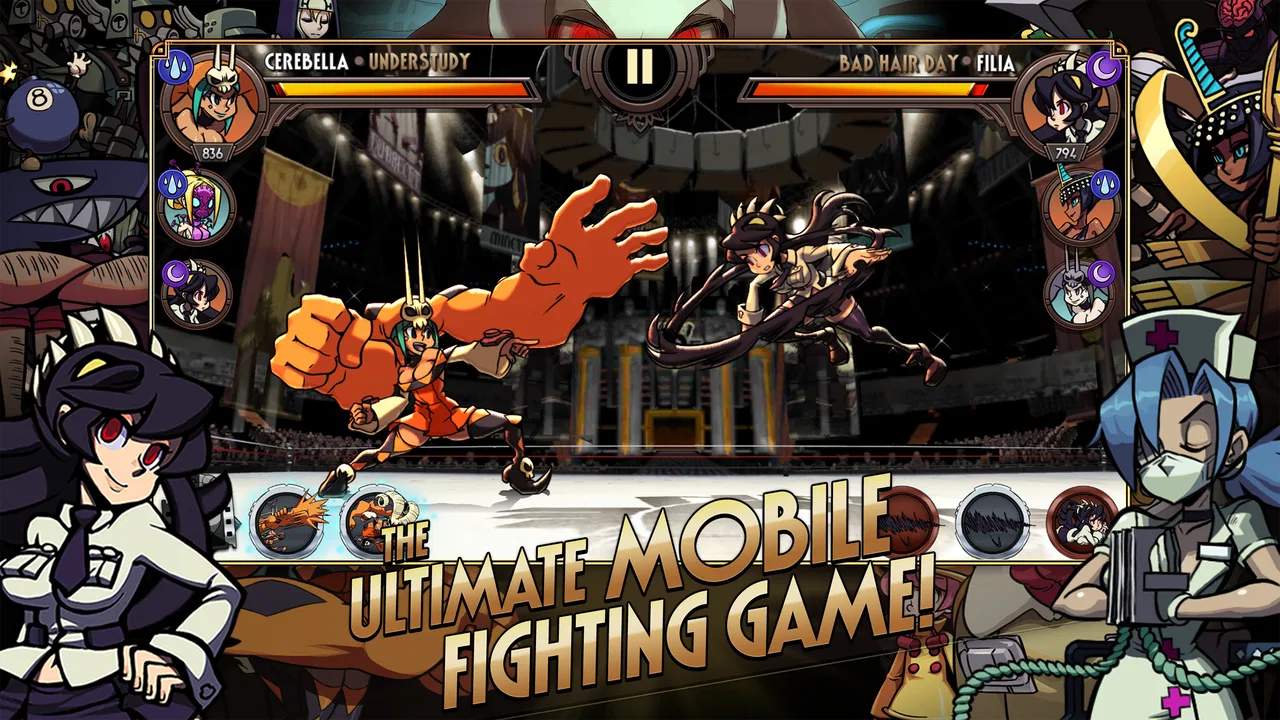
The basic idea is familiar: assemble a team of fighters, enter battles, improve your roster, and work toward stronger combinations. What makes this version stand out is how much personality each fighter brings to the screen. The animation has a comic-book quality rather than the glossy look common in many mobile brawlers, and the attacks feel readable even when several effects appear at once. I would recommend it to players who enjoy fighting games but also like the long-term planning of a role-playing game.
It is not a perfect fit for everyone. If you want a purely competitive fighter with every character immediately available and no collection routine, this can feel too layered. If you prefer a relaxed game that never asks you to repeat battles or manage upgrades, the progression may also become tiring. My experience was strongest when I treated it as a short-session strategy game with fighting at its center, not as a replacement for a traditional console fighter.
You May Also Like

 Blood Strike: 2.5 Anniversary
Blood Strike’s Loadouts Turn Every Drop Into a Tactical Gamble
A close look at Blood Strike’s custom loadouts: how fast access to signature weapons reshapes its battle royale rhythm, rewards preparation, and narrows the gap between fights.

 Pandora - Music & Podcasts
Pandora’s Music Is Easy to Start, but Harder to Recover
Pandora’s strength is its low-effort path from a seed to a station. Its weak spot is how much confidence it asks you to place in connection, setup, and quiet recovery.

 8 Ball Pool
 Is Built on Rivalries, Rematches, and Routine
A close look at the rivalries, rematches, shared routines, and unanswered safety questions that turn a quick pool match into a persistent mobile community.

 Samsung Music
’s Quiet Strength Is Playing What You Already Own
Its reach comes less from spectacle than from dependable access to a personal library. That simplicity is both the app’s strongest retention engine and its ceiling.

 AccuWeather: Weather Radar
AccuWeather Review: A Quick, Clear Forecast for Everyday Decisions
For everyday plans, the best forecast is the one you can understand quickly. AccuWeather makes rain timing, radar, and local conditions easy to act on, with a few trade-offs.

 Hill Climb Racing
Why Hill Climb Racing Still Turns Crashes Into One More Run
A tiny car, a bumpy hill and one more upgrade: Hill Climb Racing keeps resurfacing because its simple chaos makes every near-miss feel personal.
More From Our News Desk



What makes the first sessions enjoyable—and where they get awkward
The opening battles do a good job of showing the appeal of the combat. Matches are short enough for a commute or a break, and the controls are designed around touch rather than trying to imitate a full controller. I could concentrate on movement, attacks, blocks, and special actions without feeling that the screen was overloaded. That accessibility is valuable, especially for someone who has never played a mobile fighting RPG.
The first point of friction is that the game contains several layers competing for attention. Battles, fighters, upgrades, rewards, and different forms of progression can make the early menus feel busier than the actual fights. I recommend resisting the urge to spend every reward immediately. First, play enough matches to understand which fighters feel comfortable under your fingers. A character that looks powerful on paper may not suit your timing or preferred distance.
The large roster is exciting, but it can also create decision fatigue. The game offers more than 300 fighters to collect, so a new player may wonder whether every early resource should go toward the newest addition. In my experience, building a dependable small group is more useful than spreading upgrades across everyone. Keep one fighter you handle confidently, one who covers a different range or rhythm, and a third who gives you another way to approach difficult encounters.
Another common stumbling block is expecting button-mashing to carry a fight. It may work during the easiest encounters, but later battles reward patience. Blocking at the right moment, watching an opponent’s pattern, and saving a stronger action for a clear opening usually produces better results than attacking constantly. This is one of the game’s less obvious strengths: the collection layer matters, but it does not completely replace learning how to fight.
The hand-drawn style can also affect how newcomers read the action. The art is expressive, and that is part of the charm, yet visual flair may make it harder to notice a small opening during a crowded exchange. I found it helpful to focus on the opponent’s movement rather than the impact effects. When a match feels chaotic, slowing down usually helps more than changing the entire team.
Checks worth making before blaming the game
Because this is a live mobile game with online elements such as PvP and guild play, a smooth setup matters. Before judging a failed launch or interrupted session, I would check that the device meets the minimum operating-system requirement and that the game has enough free storage for its installation and later updates. A device that technically runs Android 6.0 may still struggle if it is old, crowded, or already working hard in the background.
I also recommend starting with a stable connection. A story battle may feel more forgiving when a connection changes, but competitive play is a poor place to test unreliable Wi-Fi or mobile data. If a match suddenly behaves strangely, switch networks before assuming that your team, controls, or account has caused the problem. Restarting the game after a network change is a simple step, but it can prevent a half-loaded session from confusing the issue.
Keep the first launch uncomplicated. Close demanding apps, let the initial resources finish loading, and avoid repeatedly tapping through screens while the game is still responding. Rapidly reopening it after a crash can make it difficult to tell whether the problem is temporary or repeatable. I prefer to make one clean attempt, note exactly where it stops, and then try again after a full restart.
Touch controls deserve their own check. If attacks seem delayed, try playing without a thick screen protector or while the device is charging with a cable that may be awkwardly positioned. Wipe the display and hold the phone in a way that leaves both thumbs clear of the edges. These details sound minor, but a fighting game exposes touch problems much faster than a turn-based title.
The age rating is Teen, which is worth considering before installing it on a shared family device. The game is free to download and play, but optional purchases can cost from $0.99 to $99.99 per item. I would set a purchase restriction before handing the phone to a younger player, particularly because the collection structure naturally encourages curiosity about new fighters and upgrades.
A reliable routine when progress or a session feels stuck
When a battle goes badly, my first recovery method is deliberately practical: leave the match, return to the main screen, and check whether the fighter or team setup actually saved. I then replay an easier encounter instead of immediately retrying the same difficult stage. That gives me a chance to confirm that controls, rewards, and progression are behaving normally before spending more time on the original obstacle.
If a reward appears late or a menu does not refresh, I avoid repeatedly purchasing or claiming anything. I close the game normally, reopen it, and allow the account information to load before touching the relevant screen again. If the issue continues, I record the stage, the action I took, and what changed afterward. Clear notes are far more useful when seeking help than saying only that the game is broken.
A useful recovery workflow is to separate combat trouble from progression trouble. First, test a battle with a familiar fighter. Then inspect whether the roster, upgrades, and rewards appear as expected. If combat works but a particular menu does not, the issue is probably localized to that screen or session. If every part of the game is slow or unresponsive, the device, connection, or current app state deserves attention before you rebuild your team.
I would also avoid making major roster decisions while frustrated. Selling, sacrificing, or spending resources simply to force progress can create a second problem that is harder to undo. Take a short break, return to a lower-pressure activity, and compare the fighter’s actual performance with its displayed information. The most valuable early habit is learning what each resource does before committing it.
PvP and guild play require a different recovery mindset. A loss does not automatically mean the opponent had an unbeatable roster, and a connection hiccup does not automatically mean your controls failed. Review the opening of the match: did you attack into a block, use a special action without an opening, or choose a team with no answer to the opponent’s rhythm? Treating each defeat as a small diagnostic exercise makes the competitive side less discouraging.
When the problem is really the device, connection, or expectation
Not every interruption comes from the application itself. If other games also overheat the phone, lose connection, or close unexpectedly, the wider device environment is a stronger suspect. Freeing storage, restarting the phone, and closing background apps are sensible general checks. I would not change several settings at once, because then it becomes impossible to know which action helped.
Connection problems are especially easy to misread. A weak signal can make online features appear inconsistent while offline-looking menus seem fine. Test the game near the router or on a reliable mobile connection, and compare the result across more than one session. If only one network produces the issue, focus on that network rather than repeatedly reinstalling the game.
Performance expectations matter too. The art is not technically plain, and battles can become visually busy. On a modest phone, long sessions may feel less comfortable than short ones even when the game launches correctly. I found that brief play periods are a better match for the design anyway: a few fights, a quick roster decision, and a pause before the next round keeps the experience focused.
There is also a difference between a genuine fault and a progression wall. A stronger opponent, a locked activity, or a team that cannot win immediately may be intentional design rather than a broken account. Try improving one fighter, changing the order of your team, and replaying a familiar battle. If the same screen fails to respond regardless of team or connection, then it becomes reasonable to treat it as a technical issue.
Players coming from traditional fighting games should adjust their expectations. This is not simply a sequence of arcade matches with a fixed cast. Collection decisions, upgrades, and repeated activities are part of the experience. On the other hand, players coming from collectible role-playing games should not ignore the fighting fundamentals. A stronger roster helps, but poor timing can still waste an advantage. The best results come from treating both sides as important.
Who will enjoy it, and who should choose something else
I think the game suits someone who wants a mobile fighter that can be played in small portions but still offers a long-term reason to return. The free entry point makes it easy to test, and the 4.6 average from around 684 thousand ratings suggests that the overall formula has connected with a substantial audience. It has also passed 10 million installs, so finding a community around its competitive and guild-oriented elements should not feel like an unusual use case.
It is particularly good for players who enjoy experimenting. You can compare fighters, adjust a team for a difficult encounter, and learn which attacks fit your own habits. Someone who likes collecting but becomes bored when every character feels interchangeable should appreciate the visual identity here. The roster is not just a list of nearly identical units; the appeal comes from discovering different personalities and combat approaches.
I would be more cautious recommending it to a player with limited patience for repetition. Progression-focused mobile games often ask you to revisit activities, and this one is no exception in spirit. If you want every session to deliver a completely new challenge, a premium fighting game with a fixed campaign may be a better choice. You would give up the collection loop, but you might gain a cleaner, more predictable structure.
It may also be a poor fit for anyone who wants to avoid optional spending entirely. You can begin without paying, but the presence of purchases from $0.99 to $99.99 per item means the game is built around a monetized collection model. I recommend treating purchases as a firm personal boundary rather than as a solution to a difficult fight. If that model makes the experience uncomfortable, a paid game without a roster economy will probably feel better.
For competitive players, the choice depends on what kind of competition you want. The PvP and guild elements add social motivation, but touch controls and mobile-session interruptions are not ideal for someone seeking the precision and consistency of a dedicated fighting-game setup. For casual rivalry, it works well. For serious tournament-style practice, I would choose a controller-based alternative instead.
My practical verdict after using the whole loop
What stayed with me was the balance between immediate action and gradual planning. I could enter a fight quickly, but I also had reasons to think about which fighter deserved attention and how my team handled different situations. The game feels most rewarding when I make a small adjustment, return to a stage, and win because I understood the encounter better—not merely because I waited for a larger number.
The main friction is the same feature that gives it longevity: there is a lot to manage. New players should expect a learning period for menus, resources, and roster choices. My advice is to keep the first team compact, spend cautiously, and use easy battles to learn controls rather than rushing toward the hardest available activity. That approach reduces the feeling that every early decision is permanent.
Version 8.9.1 is the current version, and the game remains free with optional purchases. Those details make it easy to try, but they do not remove the need for sensible setup checks. Use a supported device, start with a stable connection, protect purchases, and restart cleanly when a session behaves strangely. Most importantly, distinguish a technical failure from a hard fight before changing your roster or spending resources.
My final recommendation is positive, with conditions. I would suggest it to a friend who likes stylish 2D combat, character collecting, and short mobile sessions that reward practice. I would skip it for someone who dislikes repeated progression, wants a completely purchase-free environment, or needs the precision of a traditional controller fighter. For the right player, Skullgirls is strongest when its collection system supports the fighting rather than replacing it. Give it time to teach you its rhythm, and the unusual mix becomes much more satisfying than the first busy menus suggest.
Autumn Games, LLC has built a game with a distinct visual voice and enough tactical room to keep the battles from feeling disposable. I would install it with realistic expectations, begin slowly, and judge it after learning the combat rather than after the opening tutorial. That is when the hand-drawn style, team decisions, and competitive possibilities start working together instead of feeling like separate systems.
FAQs for Skullgirls: Fighting RPG
01What is Skullgirls: Fighting RPG?
Skullgirls: Fighting RPG is a mobile fighting and role-playing game based on the stylish Skullgirls universe. You collect characters, build teams, upgrade their abilities, and battle through story chapters, events, and competitive modes. Its hand-drawn visual style, dramatic animations, and rhythm-based combat make it different from many standard mobile fighting games, while the RPG progression adds long-term depth.
02Is Skullgirls: Fighting RPG free to download and play?
Yes, Skullgirls: Fighting RPG can generally be downloaded and played for free, but it includes optional in-app purchases. These purchases may provide premium currency, character-related items, upgrade materials, or other progression resources. You can experience the main gameplay without paying, although advancing faster or collecting specific fighters may require patience, regular play, or spending money.
03Does Skullgirls: Fighting RPG require an internet connection?
An internet connection is normally required for many important features, including account synchronization, online events, updates, rewards, and competitive content. The game also communicates with its servers to manage progression and purchases. Because of this, it is not the best choice for completely offline gaming. A stable connection is recommended to avoid interruptions during battles or when claiming rewards.
04Is Skullgirls: Fighting RPG suitable for beginners?
The game is accessible to beginners because its early battles introduce basic attacks, blocks, special moves, and team-building gradually. However, mastering timing, combos, character abilities, and defensive choices takes practice. New players should expect some menus, currencies, and upgrade systems to learn. Completing tutorials and focusing on a small group of reliable fighters makes the opening experience easier.
05What devices are compatible with Skullgirls: Fighting RPG?
Skullgirls: Fighting RPG is designed for modern Android and iOS devices, but exact compatibility depends on the operating system version, available storage, and the game’s current technical requirements. Older phones or tablets may experience longer loading times, reduced performance, or crashes. Before downloading, check the official Google Play Store or App Store listing for supported versions and required space.
Pros
- Distinctive hand-drawn art and expressive character animations.
- Easy-to-learn controls with enough depth for skilled players.
- Large roster with varied fighters
- abilities
- and playstyles.
- Frequent events provide new challenges and rewards.
- Story mode adds context and personality beyond standard battles.
Cons
- Progression can feel slow without spending premium currency.
- Duplicate fighters are common when opening relics.
- Energy limits may interrupt longer play sessions.
- Some advanced mechanics are poorly explained to newcomers.
- Online matches can be affected by connection issues or uneven teams.

Skullgirls: Fighting RPG
Gallery